
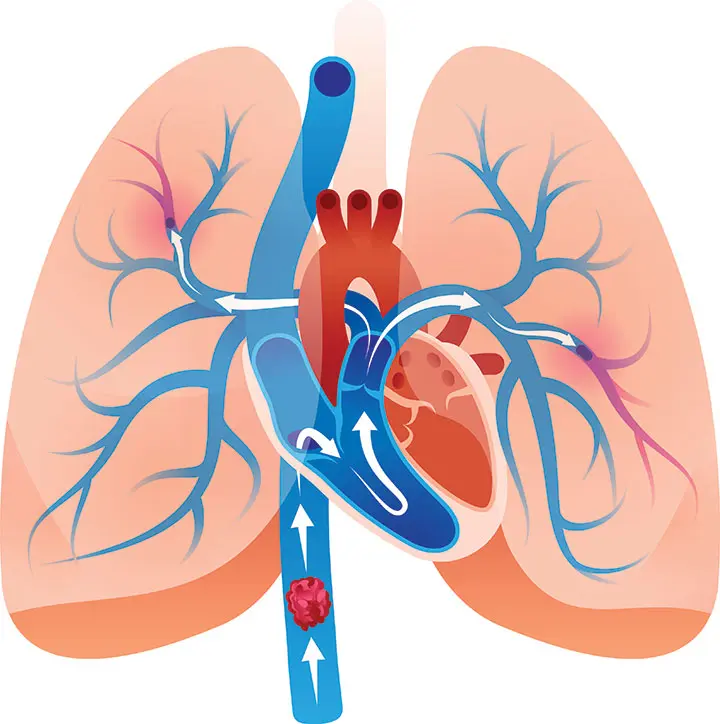
Pulmonary embolism (PE) is a serious and potentially life-threatening condition that occurs when a blood clot blocks one or more arteries in the lungs. These blood clots usually originate in the legs or other parts of the body (deep vein thrombosis or DVT) and travel through the bloodstream to the lungs.
Causes
The formation of blood clots that can lead to pulmonary embolism may be caused by several factors:
- Prolonged immobility: Such as sitting for long periods during travel or being confined to bed during prolonged illness.
- Surgery or injury: Especially surgeries of the hip or leg, or other major surgeries.
- Cancer: Certain types of cancer and cancer treatments can increase the risk of blood clots.
- Hormone therapy or birth control pills: These can increase the tendency of the blood to clot.
- Medical conditions: Including heart disease, lung disease, and inflammatory bowel disease.
- Pregnancy: Pregnancy increases the pressure in the veins of the pelvis and legs.
Symptoms
Symptoms of pulmonary embolism can vary greatly, but typically include:
- Sudden shortness of breath: This may occur at rest or during physical activity.
- Chest pain: You may feel like you’re having a heart attack. The pain may become worse with deep breathing, coughing, eating, or bending.
- Cough: The cough may produce bloody or blood-streaked sputum.
- Leg pain or swelling: Typically in the calf, which may suggest a DVT.
- Other symptoms: Sweating, wheezing, lightheadedness, or fainting.
Diagnosis:
Diagnosing PE involves several steps and tests:
- Medical history and physical exam: To assess symptoms and check for signs of DVT.
- D-dimer blood test: Measures a substance in the blood that’s released when a clot dissolves. High levels suggest the presence of an active clot, but D-dimer levels can be elevated for other reasons.
- Computed tomography pulmonary angiography (CTPA): A special type of X-ray that can visualize the arteries in the lungs.
- Ventilation-perfusion scan (V/Q scan): Assesses airflow and blood flow in the lungs.
- Ultrasound of the legs: To check for signs of deep vein thrombosis.
- Pulmonary angiogram: More invasive, this test involves inserting a catheter into a large vein and injecting dye to make the blood vessels of the lungs visible on an X-ray.
Treatment:
Treatment for pulmonary embolism is aimed at stopping the clot from getting bigger and preventing new clots from forming:
- Anticoagulants: Also known as blood thinners, these are the most common medications used to treat PE. They prevent new clots from forming and stop existing clots from growing.
- Thrombolytics: These drugs, also called clot busters, are used in life-threatening situations to quickly dissolve the clot.
- Compression stockings: To prevent leg swelling and reduce the risk of developing DVT in the legs.
- Inferior vena cava (IVC) filter: If anticoagulants are not an option, a filter may be inserted into a large vein in the abdomen to catch clots before they can enter the lungs.
Prevention:
Preventive measures may include:
- Staying active and mobile: Especially after surgery or during long periods of immobility.
- Compression stockings: During periods of high risk, such as post-surgery.
- Medication: Taking anticoagulants as prescribed when risk factors are present.
Immediate medical attention is crucial if pulmonary embolism is suspected. Quick treatment can greatly reduce the risk of death and increases the chances of a better outcome.